Introduction
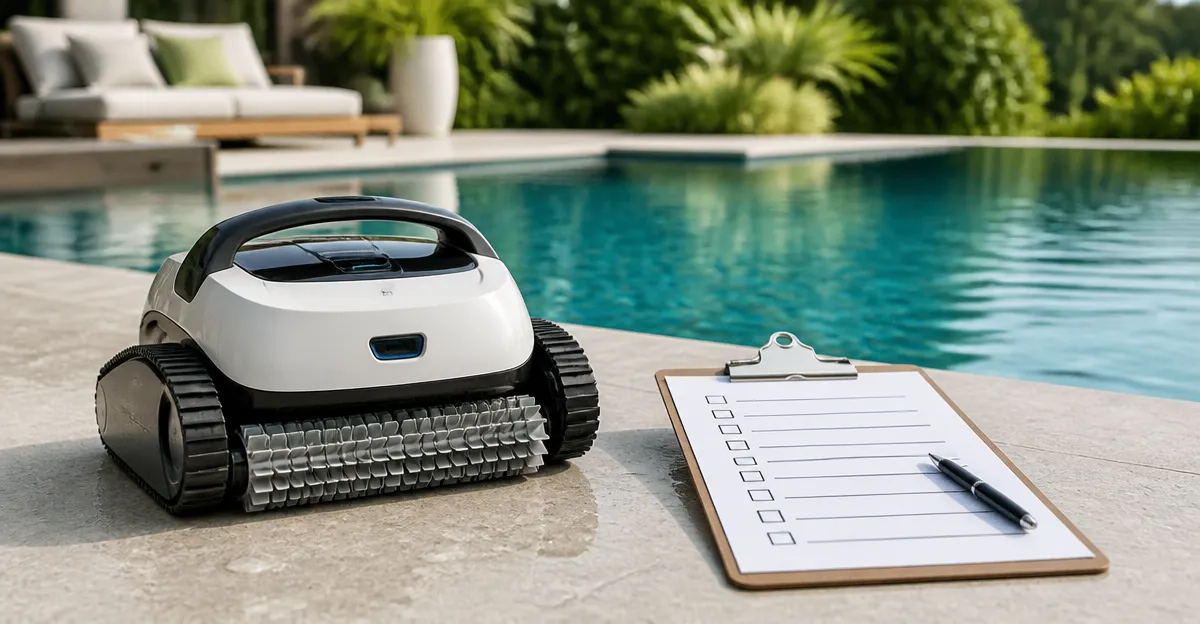
This guide explains how to evaluate a used cordless robotic pool cleaner before purchase. Readers will learn which visual and functional checks are essential, how to verify battery health, and which specifications matter most for long‑term reliability. The article also recommends five current market models that illustrate best‑in‑class features and price points. By following the checklist, a buyer can avoid costly surprises and secure a device that delivers clean water for many seasons.
Background and Context
Robotic pool cleaners combine a waterproof motor, suction pump, navigation sensors, and a rechargeable battery into a single autonomous unit. Unlike corded vacuums, cordless models operate without a power cable, allowing them to reach walls, steps, and waterlines freely. Modern units use smart navigation, dual‑stage filtration, and auto‑docking to simplify maintenance. Understanding these core components helps a buyer assess whether a used cleaner retains its original performance.
Key technical terms include:
- GPH (gallons per hour) – a measure of suction power; higher values indicate faster debris removal.
- Battery runtime – the continuous operating time on a full charge, typically expressed in minutes.
- Gyroscope navigation – sensors that map pool contours and guide the robot along optimized paths.
- Dual‑stage filtration – a primary mesh that captures large debris and an ultra‑fine insert that removes microscopic particles.
When inspecting a used unit, one must verify that these systems remain functional and that the device has not suffered water‑infiltration damage.
Inspection Checklist for Used Cordless Robotic Cleaners
- Exterior Condition – Examine the housing for cracks, corrosion, or missing seals. Even minor damage can allow water into the motor housing.
- Battery Health – Request a recent runtime test. A healthy battery should deliver at least 80% of the manufacturer’s stated runtime (e.g., 240 minutes for the Aiper Scuba S3 in ECO mode).
- Filter Integrity – Remove both the primary mesh and ultra‑fine insert. Check for tears or clogged material that could impair suction.
- Motor and Pump – Listen for abnormal noises when the unit runs in water. A smooth, low‑pitch hum indicates the pump is operating correctly.
- Navigation Sensors – Verify that the robot can detect walls and obstacles by observing its path during a short test run. Erratic movement may signal sensor failure.
- Docking Mechanism – Ensure the auto‑docking feature lifts the robot to the waterline and holds it for at least ten minutes, as described for the Beatbot Sora 10.
- Software Compatibility – Confirm that the companion app can pair with the device via Bluetooth or Wi‑Fi. Firmware updates may be unavailable for older models.
Document each observation with photos and note any missing accessories such as chargers, filters, or remote handles.
Comparison and Selection Guide
The following table compares the five featured models on dimensions that influence purchase decisions. Prices reflect current new‑item listings; a used unit should be priced proportionally lower.
| Model | Weight | Runtime (min) | Suction (GPH) | Coverage (sq ft) | Price (USD) | Rating |
|---|---|---|---|---|---|---|
| Aiper Scuba S3 | 18 lb | 240 (ECO) | Not specified | Not specified | 699.99 | 4.8/5 (113 reviews) |
| Beatbot Sora 10 | Not specified | 300 | 6,800 | 3,229 | 469.00 | 4.6/5 (94 reviews) |
| Wybot C2 | Not specified | 180 | Not specified | 2,152 | 499.99 | 4.2/5 (423 reviews) |
| Wybot C1 | Not specified | 120‑160 | 2,642 | 1,614 | 399.99 | 4.2/5 (81 reviews) |
| Wybot C1 Pro | Not specified | 160 | 2,642 | 1,618 | 399.99 | 4.0/5 (1,040 reviews) |
When choosing a model, consider the following criteria:
- Pool Size – Larger pools (over 2,500 sq ft) benefit from the high‑capacity suction of the Beatbot Sora 10, which can cover up to 3,229 sq ft in a single run.
- Debris Load – If the pool accumulates leaves or sand, prioritize models with larger debris baskets, such as the 5 L basket on the Beatbot Sora 10 or the dual‑stage filtration of the Aiper Scuba S3.
- Battery Runtime – For extended cleaning sessions, the 300‑minute runtime of the Beatbot Sora 10 or the 240‑minute ECO mode of the Aiper Scuba S3 are advantageous.
- Smart Features – Users who value remote scheduling should select a model with a robust app, such as the Aiper Scuba S3 or the Wybot C1, both of which support battery‑level monitoring and cleaning logs.
For a used purchase, weigh the listed price against these capabilities. A unit priced at 60 % of the new retail price but still offering a 300‑minute runtime and intact battery is typically a sound investment.
Best Practices and Tips for Buying Used
Follow these actionable steps to protect your investment:
- Request a recent performance video that shows the robot completing a full cycle, including wall climbing and waterline scrubbing.
- Ask the seller for original purchase receipts and warranty documentation; some manufacturers honor warranties on transferred ownership.
- Verify that the charger and battery are authentic accessories; third‑party chargers can damage lithium cells.
- Inspect the filter inserts for wear; replaceable ultra‑fine filters should be available at the manufacturer’s store.
- Negotiate a short‑term return window, allowing you to confirm that the robot docks correctly and that the app pairs without errors.
Maintain the device after purchase by cleaning the filter after each run, storing the battery in a cool, dry place, and applying firmware updates through the official app.
Frequently Asked Questions
- How can I test battery health without a multimeter?
- Run the cleaner for a timed interval (e.g., 30 minutes) and record the remaining runtime displayed in the app. Compare the observed remaining time to the advertised full‑charge runtime; a discrepancy greater than 20 % suggests battery degradation.
- Is it safe to use a cordless cleaner in a saltwater pool?
- Yes, models such as the Beatbot Sora 10 are explicitly rated as saltwater‑safe up to 5,000 ppm, and their corrosion‑resistant housings protect internal components.
- What maintenance schedule maximizes lifespan?
- Clean the primary mesh after each cleaning cycle, replace the ultra‑fine filter every three months, and perform a full battery charge‑discharge cycle once per season.
- Can I use a used robot with a different pool shape than the original owner?
- Modern gyroscope navigation adapts to varied pool geometries; however, verify that the robot can map the new shape during an initial test run.
- Do I need a separate power outlet for the charger?
- All featured models include a standard AC charger that plugs into a conventional household outlet; no dedicated circuit is required.
Conclusion
This checklist equips a prospective buyer with the knowledge to assess condition, verify performance, and compare key specifications of cordless robotic pool cleaners. By focusing on battery runtime, suction capacity, navigation reliability, and smart‑app integration, one can select a used unit that offers long‑term value while avoiding common pitfalls. Applying the inspection steps and best‑practice tips will result in a cleaner pool, more leisure time, and a prudent financial decision.
Products Featured in This Guide
Aiper Scuba S3
Price: $699.99 – Rating: 4.8/5 (113 reviews)
Featured for its 240‑minute ECO runtime, dual‑stage ultra‑fine filtration, and reliable auto‑docking with smartphone alerts.
Beatbot Sora 10
Price: $469.00 – Rating: 4.6/5 (94 reviews)
Featured for its 6,800 GPH suction, 300‑minute runtime, large 5 L debris basket, and saltwater‑safe construction.
Wybot C2
Price: $499.99 – Rating: 4.2/5 (423 reviews)
Featured for its smart Bluetooth control, 180‑minute runtime, and dual‑filtration system with 10 µm ultra‑fine filter.
Wybot C1
Price: $399.99 – Rating: 4.2/5 (81 reviews)
Featured for its triple‑motor climbing power, 2,642 GPH suction, and intelligent navigation with S‑path and N‑path cleaning modes.
Wybot C1 Pro
Price: $399.99 – Rating: 4.0/5 (1,040 reviews)
Featured for its professional‑grade gyroscope navigation, 160‑minute runtime, and OTA firmware upgrades that keep the device current.