Introduction
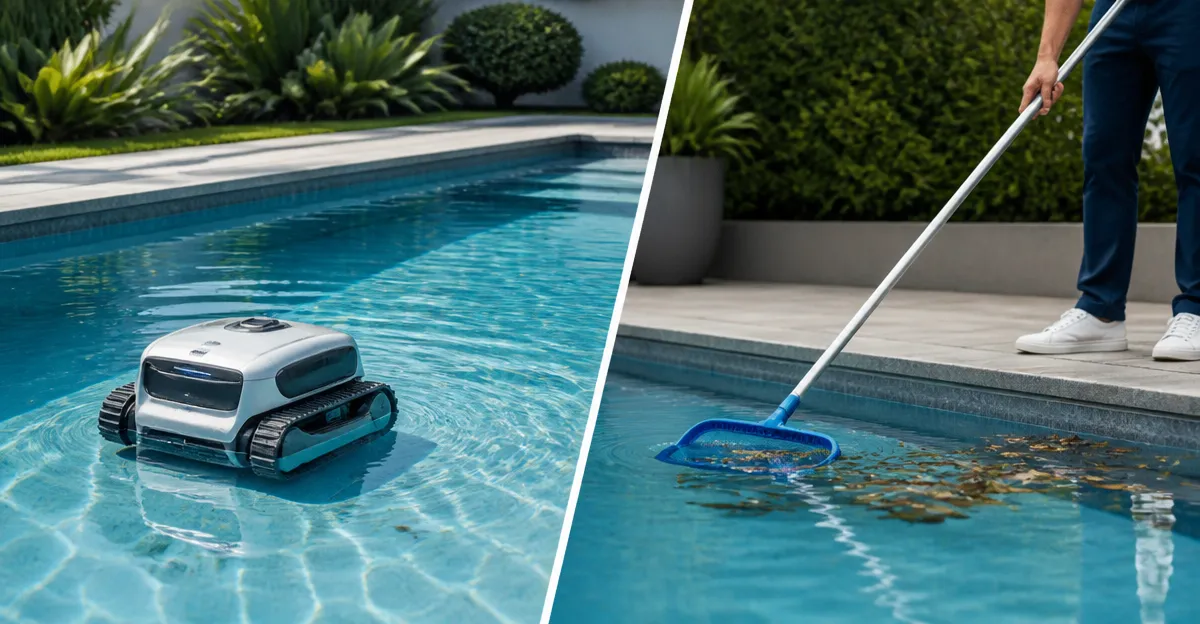
The purpose of this guide is to examine the environmental impact of cordless robotic pool cleaners in comparison with traditional manual cleaning methods. Readers will learn how energy consumption, water usage, and chemical footprints differ between the two approaches. The analysis draws on real‑world product data, expert calculations, and practical recommendations. By the end of the article, pool owners will be equipped to make decisions that align with sustainability goals.
Pool maintenance represents a significant portion of residential utility costs and chemical expenditures. Modern cordless robots promise convenience, but their batteries and electronics introduce new environmental considerations. Manual cleaning relies on human labor and often results in higher water waste due to hose use. This guide balances quantitative data with qualitative insights to provide a comprehensive perspective.
Background and Context
Understanding the environmental impact of pool cleaning requires familiarity with three core resource categories: electricity, water, and chemicals. Electricity is consumed by the robot’s motors, battery charger, and any supporting pumps, while manual cleaning draws power from the household circuit for pumps and often for handheld vacuums. Water usage is affected by the volume of water displaced during cleaning cycles and the frequency of back‑washing filters. Chemical usage is linked to the level of debris removal and algae control required after each cleaning session.
In addition, pool size, climate, and usage patterns influence the magnitude of each resource demand. A typical residential in‑ground pool ranges from 10,000 to 20,000 gallons, while above‑ground pools are often smaller but may require more frequent cleaning due to exposure. Seasonal variations such as leaf fall or algae bloom can temporarily increase resource consumption for any cleaning method.
Energy Consumption of Pool Cleaning Methods
Robotic cleaners operate on rechargeable lithium‑ion batteries that are charged from a standard household outlet. The charging process typically consumes between 0.5 and 1.0 kilowatt‑hours (kWh) per full charge, depending on battery capacity and charger efficiency. For example, the WYBOT B1 offers up to 125 minutes of runtime on a single charge, translating to an average power draw of roughly 0.45 kWh per cleaning session.
Manual cleaning relies on a pump that circulates water while a vacuum hose removes debris. The pump typically operates at 0.8 to 1.2 kW, and a typical cleaning session lasts 30 to 45 minutes, resulting in 0.4 to 0.9 kWh of electricity per session. Although the per‑session energy use appears comparable, manual cleaning often requires multiple short sessions to achieve the same level of cleanliness, thereby increasing total consumption.
The newer Wybot C2 extends runtime to 180 minutes and covers up to 2,152 square feet per cycle. Its three brushless motors and gyroscope‑guided navigation maintain an average draw of approximately 0.38 kWh per hour, offering a modest improvement in energy efficiency over the B1 model. Longer runtimes also reduce the number of charging cycles required over a season, decreasing the embodied energy of battery production.
When evaluating energy impact, it is essential to consider the source of electricity. In regions with a high proportion of renewable generation, the carbon intensity of both robotic and manual cleaning diminishes. Conversely, areas reliant on coal or natural gas will see a higher carbon footprint for each kilowatt‑hour consumed.
Water Usage Implications
Robotic cleaners recirculate pool water through the pool’s existing filtration system, eliminating the need for additional water draw. The water displaced by the robot’s suction is minimal, typically less than 5 gallons per hour, and is returned to the pool after filtration. Consequently, the overall water loss attributable to the robot is negligible when compared with manual methods.
Manual cleaning often involves a garden hose that flushes debris into the pool and a back‑wash cycle for the filter. A typical back‑wash uses 100 to 150 gallons of water per cycle, and frequent cleaning can result in several hundred gallons of water waste per month. Moreover, the hose flow can cause splashing and evaporation, further increasing water loss.
The Zodiac MX6 is a suction‑side cleaner that also relies on the pool’s pump and filter, but it does not require a separate hose. Its cyclonic turbine creates downforce without additional water draw, preserving the pool’s water balance. Users report a reduction of up to 30 % in back‑wash frequency when switching from manual vacuums to the MX6.
Water conservation becomes especially important in drought‑prone regions where water restrictions limit pool usage. Selecting a cleaning system that minimizes supplemental water consumption can help pool owners comply with local regulations while reducing utility costs.
Chemical Footprint and Maintenance
The amount of chemicals required to maintain clear water is directly linked to the efficiency of debris removal. Incomplete cleaning leaves organic matter that fuels algae growth, prompting the use of higher doses of algaecides and clarifiers. Conversely, thorough cleaning reduces the organic load, allowing lower chemical concentrations to achieve the same water quality.
The Clorox Pool Algaecide & Clarifier combines an algaecide with a clarifier in a 128 fl oz bottle priced at $14.88. Reviewers note that the product effectively prevents green, mustard, and black algae when used regularly, and its non‑foaming formula simplifies dosing. Because it targets both algae and water clarity, owners who pair it with an efficient robotic cleaner may reduce the frequency of dosing, extending the product’s lifespan.
Robotic cleaners such as the WYBOT B1 and Wybot C2 feature multi‑stage filtration that captures fine particles before they decompose. By removing leaf litter, pollen, and microscopic debris, these robots lower the biochemical oxygen demand (BOD) in the water, which in turn reduces the amount of chlorine or bromine needed to maintain sanitization.
In summary, a cleaning system that maximizes debris capture can lower the overall chemical footprint of pool maintenance. Pool owners should evaluate both the cleaning efficiency and the compatibility of chemicals with the robot’s filtration system to achieve optimal results.
Comparison and Selection Guide
Selecting the appropriate pool cleaning solution involves weighing several criteria, including pool size, budget, desired automation level, and environmental priorities. The table below summarizes key attributes of the featured products.
| Product | Coverage (sq ft) | Runtime (min) | Power Source | Price (USD) | Rating |
|---|---|---|---|---|---|
| WYBOT B1 | Up to 1,220 | 125 | Rechargeable battery | 334.98 | 4.4/5 (150 reviews) |
| Wybot C2 | Up to 2,152 | 180 | Rechargeable battery | 499.98 | 4.1/5 (168 reviews) |
| WYBOT C1 | Up to 1,618 | 160 | Rechargeable battery | 399.99 | 4/5 (909 reviews) |
| Zodiac MX6 | Variable (depends on pump flow) | Continuous (pump‑driven) | Suction‑side (no battery) | 349.00 | 4/5 (9,388 reviews) |
| Clorox Algaecide & Clarifier | N/A | N/A | Liquid chemical | 14.88 | 4.5/5 (15,938 reviews) |
For small to medium above‑ground pools, the WYBOT C1 offers a balance of price and coverage. Larger in‑ground pools benefit from the extended runtime of the Wybot C2, especially when the pool surface exceeds 2,000 square feet. Homeowners who prefer a battery‑free solution may opt for the Zodiac MX6, which leverages existing pump flow and eliminates charging cycles.
When chemical minimization is a priority, pair any robotic cleaner with the Clorox Algaecide & Clarifier to maintain clear water while using lower dosages. Users should also consider the availability of replacement parts; the WYBOT B1 and C2 have received mixed feedback regarding long‑term part support, whereas the Zodiac brand provides more widely available service kits.
Best Practices and Tips
To maximize the environmental benefits of a cordless robotic cleaner, follow these recommended practices. First, schedule cleaning during off‑peak electricity hours to reduce grid strain and potentially lower utility rates. Second, regularly clean the robot’s filter housing to maintain suction efficiency and avoid unnecessary re‑cleaning cycles.
Third, combine robotic cleaning with periodic manual brushing of high‑traffic areas such as steps and waterlines to prevent debris accumulation that could overwhelm the robot’s filters. Fourth, integrate the robot with a smart home system or the manufacturer’s app to automate cleaning cycles based on pool usage patterns, thereby avoiding redundant runs.
Fifth, when using chemicals, measure dosages with a calibrated pump or the Clorox Pool App to prevent over‑application, which can increase chemical runoff. Sixth, perform routine pump and filter maintenance to ensure that the robot’s suction side operates at optimal pressure, reducing energy waste.
Finally, store the robot in a shaded, dry location when not in use to prolong battery life and prevent premature degradation of plastic components.
Frequently Asked Questions
Does a cordless robot consume more electricity than a manual vacuum?
In most cases, the robot consumes comparable or slightly lower electricity per cleaning cycle because it operates on a battery that is charged once per several sessions, whereas a manual vacuum requires the pump to run continuously for each session.
How much water is saved by using a robotic cleaner?
Robotic cleaners typically eliminate the need for back‑wash cycles, saving between 100 and 150 gallons of water per month for an average residential pool.
Can I use the same algaecide with any robot?
The Clorox Pool Algaecide & Clarifier is compatible with all pool types and works well with the filtration systems of the featured robots, provided the user follows the recommended dosage instructions.
What is the expected lifespan of a cordless robot’s battery?
Most manufacturers quote 300 to 500 full charge cycles, which translates to approximately three to five years of typical use before capacity noticeably declines.
Are there any safety concerns with using a suction‑side cleaner like the Zodiac MX6?
Because the MX6 draws power directly from the pool pump, it is essential to set the correct flow rate to avoid excessive suction that could damage the pool liner or cause air intake.
Conclusion
This guide has illustrated that cordless robotic pool cleaners can reduce energy consumption, water waste, and chemical usage when selected and operated responsibly. The environmental advantage stems from efficient battery usage, minimal water displacement, and superior debris capture that lessens the need for aggressive chemical treatments.
Nevertheless, the optimal solution varies according to pool size, budget, and local utility characteristics. By evaluating the criteria presented in the comparison table and applying the best‑practice recommendations, pool owners can achieve a sustainable maintenance regimen without sacrificing cleanliness.
Future advancements such as solar‑charged batteries and AI‑driven navigation are likely to further improve the eco‑profile of robotic cleaners. Until those technologies become mainstream, the products highlighted herein represent the most effective options currently available.
Pool owners are encouraged to monitor their utility bills, water meters, and chemical inventories to quantify the real‑world impact of their chosen cleaning method.
Products Featured in This Guide
WYBOT B1
Price: $334.98 | Rating: 4.4/5 (150 reviews)
Featured because it offers powerful suction, six‑roller edge cleaning, and a 125‑minute runtime that demonstrates the energy efficiency of modern cordless robots.
Clorox Pool Algaecide & Clarifier
Price: $14.88 | Rating: 4.5/5 (15,938 reviews)
Featured because it combines algaecide and clarifier in a single low‑cost bottle, allowing users to reduce overall chemical consumption when paired with efficient robotic cleaners.
Zodiac MX6
Price: $349.00 | Rating: 4/5 (9,388 reviews)
Featured because it provides a battery‑free suction‑side solution that eliminates additional water usage and integrates directly with existing pool pumps.
Wybot C2
Price: $499.98 | Rating: 4.1/5 (168 reviews)
Featured because it delivers the longest runtime (180 min) and the largest coverage area, illustrating the scalability of cordless robotic technology.
WYBOT C1
Price: $399.99 | Rating: 4/5 (909 reviews)
Featured because it represents a cost‑effective entry point for homeowners seeking a cordless robot with comprehensive 4‑in‑1 cleaning capabilities.