
Introduction
Cordless robotic pool cleaners have transformed pool ownership by eliminating manual vacuuming and reducing chemical usage. This guide explains how long these devices typically last, what influences battery longevity, and how owners can extend service life through proper maintenance. Readers will gain a clear understanding of key technical concepts, compare leading models, and receive actionable tips to protect their investment. By the end, one will be equipped to select a cleaner that matches personal needs and budget while maximizing durability.
Background/Context
Traditional pool cleaning relied on suction-side vacuums, which required constant monitoring, hose management, and frequent filter cleaning. Cordless robots integrate motorized propulsion, onboard filtration, and smart navigation to operate autonomously for extended periods. Advances in lithium‑ion battery chemistry, gyroscopic navigation, and dual‑layer filtration have increased both performance and reliability. However, the longevity of these sophisticated machines depends on usage patterns, environmental conditions, and routine upkeep. Understanding these variables helps owners set realistic expectations and avoid premature failure.
Understanding Battery Life and Longevity
Battery capacity, measured in ampere‑hours (Ah), determines how long a robot can clean on a single charge. Most modern cordless cleaners use lithium‑ion cells that retain roughly 80% of their original capacity after 300–500 full cycles. A full cycle is defined as a complete charge‑discharge event, which typically occurs after each cleaning session. Factors such as temperature, depth of water, and cleaning mode (eco vs. high‑power) affect discharge rates. Manufacturers often quote runtime under ideal conditions; real‑world performance may vary by 10‑20%.
Another critical metric is charge time. Faster charging reduces downtime but can generate heat, potentially accelerating cell degradation if the charger lacks proper thermal management. Most reputable models balance charge speed with longevity, offering a 2‑hour fast charge for a full 130–180 minute runtime.
Key Factors That Influence Lifespan
Three primary categories influence the overall lifespan of cordless robotic cleaners: mechanical wear, electronic reliability, and environmental exposure.
- Mechanical Wear: Treads, brushes, and filtration baskets experience abrasion from sand, leaves, and pool chemicals. Regular inspection and replacement of wear items prolongs the robot’s structural integrity.
- Electronic Reliability: Circuit boards and sensors can suffer corrosion in highly chlorinated or salt‑water pools. Protective coatings and sealed housings mitigate this risk.
- Environmental Exposure: UV radiation, extreme temperatures, and prolonged submersion can degrade plastics and battery cells. Storing the robot in a shaded, dry area when not in use is essential.
Owners who follow manufacturer‑recommended maintenance schedules typically see service lives of 5–7 years, with many units lasting longer when cared for diligently.
Product Recommendations by Category
Below are five leading cordless robotic cleaners, each exemplifying a different strength. The first mention of each product includes a clickable Amazon link using a friendly name.
Premium All‑Rounder: Aiper Scuba S1 offers up to 270 minutes of eco‑mode runtime, 11 high‑precision sensors, and a dual‑layer 3 µm ultra‑fine filter. Rated 4.4/5 from 833 reviews, it cleans floor, walls, waterline, and shallow zones, making it suitable for large residential pools.
Established Brand Choice: Dolphin Nautilus CC provides reliable wall‑climbing scrubbing, a top‑load filter basket, and a 2‑hour automatic cycle. With a 4.1/5 rating from over 10,000 reviewers, it is a time‑tested option for both above‑ground and in‑ground pools up to 33 ft.
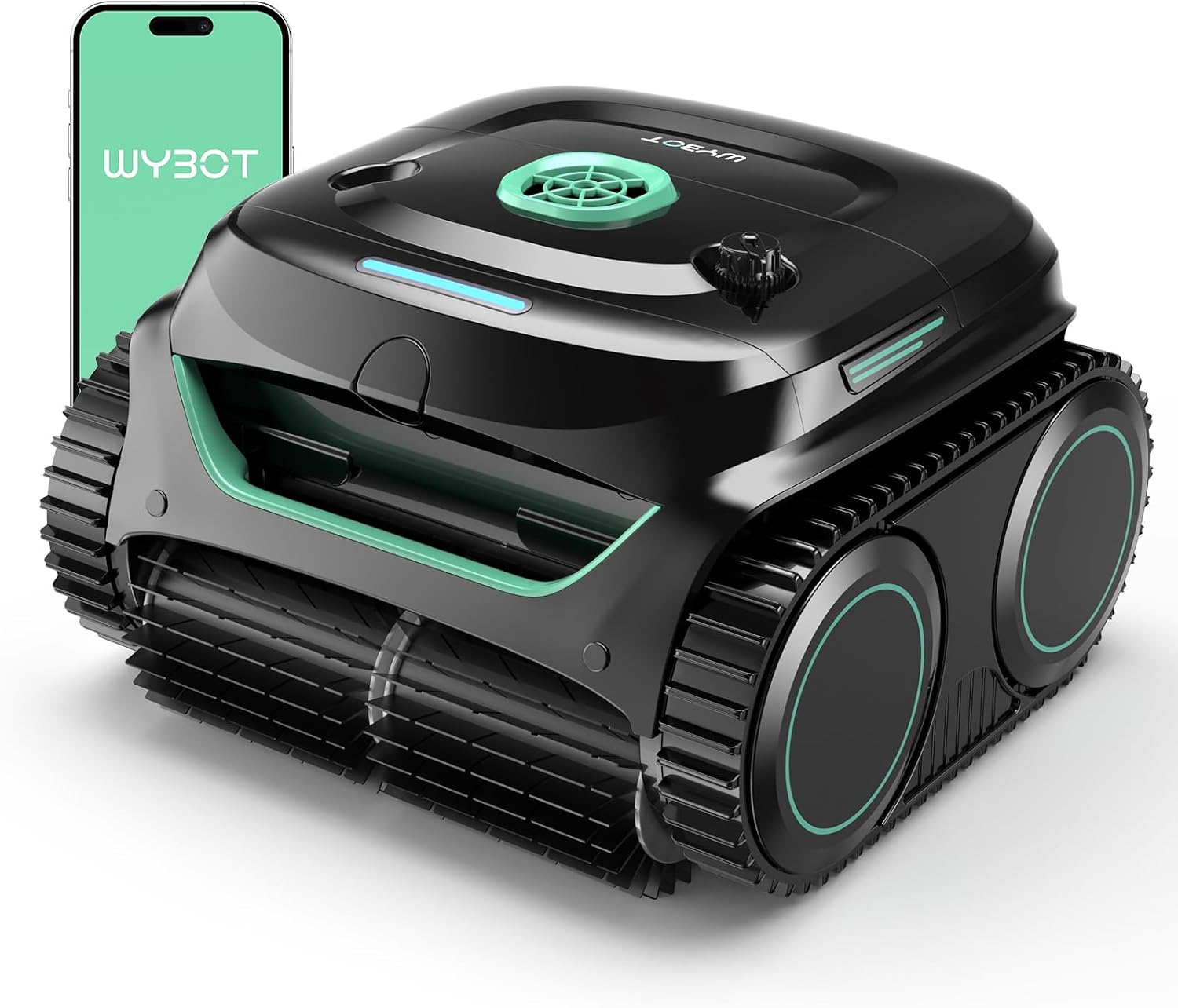
Smart Navigation Specialist: Wybot C2 integrates Bluetooth control, gyroscopic navigation, and a 10 µm ultra‑fine filter. It delivers 180 minutes of runtime and covers up to 2,152 sq ft per cycle, earning a 4.6/5 rating from 381 users.
Budget‑Friendly Above‑Ground Solution: Winny A1 features a 7‑day cycle timer, dual‑layer 180 µm mesh filtration, and 130‑minute runtime at a price of $169.98. Its 4.7/5 rating from 79 reviewers makes it an attractive entry‑level choice.
High‑Performance In‑Ground Model: Wybot C1 offers 4‑in‑1 cleaning, a high‑precision gyroscope, and up to 160 minutes of runtime on a 4‑hour charge. With a 4.0/5 rating from 923 reviews, it balances power and smart features for larger inground pools.
Comparison and Selection Guide
| Feature | Aiper Scuba S1 | Dolphin Nautilus CC | Wybot C2 | Winny A1 | Wybot C1 |
|---|---|---|---|---|---|
| Runtime (Eco/Standard) | 270 min / 180 min | 120 min (fixed) | 180 min | 130 min | 160 min |
| Filtration | 3 µm ultra‑fine + 180 µm | Standard basket | 10 µm ultra‑fine + 180 µm | 180 µm mesh + foam | 180 µm primary + 10 µm ultra‑fine |
| Navigation | 11 sensors, WavePath 2.0 | Basic wall‑climb | Gyroscope + smart app | Basic programmed timer | Gyroscope, N‑Path & S‑Path |
| Cleaning Zones | Floor, walls, waterline, shallow | Floor, walls | Floor, walls, waterline, steps | Floor only | Floor, walls, waterline, steps |
| Price (USD) | 499.99 | 699.00 | 499.99 | 169.98 | 399.98 |
| Rating | 4.4/5 | 4.1/5 | 4.6/5 | 4.7/5 | 4.0/5 |
When choosing a cleaner, consider pool size, desired cleaning zones, and willingness to engage with app‑based controls. For owners who value maximum runtime and multi‑zone coverage, the Aiper Scuba S1 stands out. Those on a tighter budget but needing reliable floor cleaning may prefer the Winny A1. Users seeking advanced navigation and remote scheduling will appreciate the Wybot C2 or C1.
Best Practices & Tips
- Pre‑Clean Large Debris: Remove leaves, twigs, and toys before each cycle to prevent filter blockage and reduce motor strain.
- Rinse and Dry Filters: After every cleaning, rinse the filter basket with a garden hose and allow it to air‑dry. This prevents mold growth and maintains suction efficiency.
- Monitor Battery Health: Perform a full charge‑discharge cycle monthly. Avoid storing the robot at a 0% charge for extended periods, as deep discharge shortens lithium‑ion lifespan.
- Inspect Treads and Brushes: Check the Caterpillar Treads (Aiper) or dual‑motor brushes (Winny) for wear every 3 months. Replace worn components promptly to preserve climbing ability.
- Protect Electronics from Chlorine: For salt‑water pools, rinse the robot’s exterior after each session and store it in a shaded cabinet to limit UV exposure.
- Use Manufacturer‑Approved Parts: When replacing filters or batteries, select OEM components to ensure compatibility and warranty compliance.
- Schedule Regular Maintenance: Set a calendar reminder for quarterly deep cleaning, firmware updates (Wybot models), and sensor calibration checks.
Frequently Asked Questions
1. How many charging cycles can a typical lithium‑ion battery endure?
Most pool robots are designed for 300–500 full cycles before capacity drops below 80%. With moderate use (2‑3 cycles per week), this translates to roughly 5‑7 years of service.
2. Can I use a pool vacuum in a salt‑water pool?
Yes, all featured models are rated for salt‑water environments, but it is advisable to rinse the robot after each use and inspect seals for corrosion.
3. What is the difference between eco mode and standard mode?
Eco mode reduces motor speed and suction power, extending runtime by up to 50% while still providing adequate cleaning for lightly soiled pools. Standard mode delivers full suction for deeper debris removal.
4. How often should I replace the filter cartridges?
Replace or clean the primary filter every 2‑3 weeks, and the ultra‑fine filter every 1‑2 months, depending on pool usage and surrounding foliage.
5. Is it safe to leave the robot in the pool year‑round?
Most units can remain submerged for weeks, but prolonged exposure to extreme temperatures may degrade seals. Store the robot in a cool, dry place during off‑season periods.
6. Do I need a separate power outlet for corded models?
Only corded cleaners, such as the Dolphin Nautilus CC, require a dedicated GFCI‑protected outlet. Cordless models operate solely on their internal battery.
7. What warranty coverage is typical?
Warranty periods range from 1 to 2 years. Extended warranties are often available through the manufacturer or third‑party retailers.
Conclusion
Cordless robotic pool cleaners combine sophisticated navigation, dual‑layer filtration, and long‑lasting lithium‑ion batteries to simplify pool maintenance. By understanding battery cycle limits, mechanical wear points, and environmental factors, owners can expect a functional lifespan of five to seven years for most devices. Selecting the right model involves balancing runtime, cleaning zones, price, and app integration. Following the maintenance best practices outlined above will further extend service life and ensure consistently sparkling water.
Products Featured in This Guide
Aiper Scuba S1
Price: $499.99 | Rating: 4.4/5 (833 reviews)
Featured for its 270‑minute eco runtime, dual‑layer 3 µm ultra‑fine filtration, and intelligent WavePath navigation covering floor, walls, waterline, and shallow zones.
Dolphin Nautilus CC
Price: $699.00 | Rating: 4.1/5 (10,677 reviews)
Featured for its proven wall‑climbing brush, top‑load filter basket, and simple plug‑and‑play operation suitable for pools up to 33 ft.
Wybot C2
Price: $499.99 | Rating: 4.6/5 (381 reviews)
Featured for its Bluetooth‑controlled smart navigation, 10 µm ultra‑fine filter, and 180‑minute runtime covering up to 2,152 sq ft.
Winny A1
Price: $169.98 | Rating: 4.7/5 (79 reviews)
Featured for its affordable 7‑day cycle timer, dual‑layer 180 µm mesh filtration, and 130‑minute runtime ideal for above‑ground pools.
Wybot C1
Price: $399.98 | Rating: 4.0/5 (923 reviews)
Featured for its comprehensive 4‑in‑1 cleaning, high‑precision gyroscope navigation, and 160‑minute runtime suitable for larger inground pools.